About Course
LOTUS SPA BODY IMAGE
PARAMEDICAL COSMETIC TATTOOS
Fundamentals, Client Consultation, Camouflage & Professional Practice
|
Instructor |
Austin |
|
Presented by |
Lotus Spa Body Image |
|
Course Presenter |
Professional Female Avatar |
|
Total Duration |
Approximately 30 Minutes |
|
Structure |
Module 1 – 15 Minutes -> Quiz 1 -> Module 2 – 15 Minutes -> Quiz 2 -> Certificate of Completion |
IMPORTANT COURSE POSITIONING
This is a course-completion program. It does not independently create medical licensure, manufacturer certification, or legal authorization to perform Paramedical Cosmetic Tattoos. Exact device settings, treatment parameters, contraindications, hygiene standards, and eligibility rules must follow the current manufacturer instructions, authorized hands-on training, Lotus Spa protocols, and applicable laws/regulations.
MODULE 1 – FUNDAMENTALS
Duration: approximately 15 minutes
Scene 1 – Course Introduction
Timing: 0:00-1:00
Visual Direction
Female instructor in a premium Lotus Spa Body Image medical-spa studio. On-screen title: Paramedical Cosmetic Tattoos.
Female Instructor Script
Hello and welcome to the Lotus Spa Body Image training course on Paramedical Cosmetic Tattoos. In this first module, we will build a practical foundation before moving into client safety and professional workflow. You will learn what the treatment is designed to do, how to explain it accurately, the types of cosmetic goals it may support, what a client may experience, and where the limits of the service begin. Throughout this course, remember that education is not a substitute for manufacturer training, local licensing requirements, or the exact protocol for the device or technique you use. Our goal is to help you communicate professionally, recognize important safety issues, and create a consistent client experience. After this module, you will complete a short knowledge assessment before moving to Module Two.
Scene 2 – What the Treatment Is
Timing: 1:00-2:30
Visual Direction
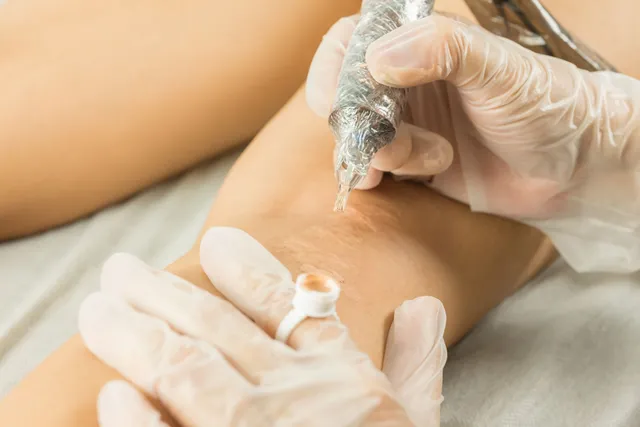
Use clean diagrams or professional treatment imagery to explain: specialized cosmetic tattooing used to visually camouflage or reconstruct the appearance of selected skin features, scars, or areola-related aesthetics within the practitioner’s legal scope.
Female Instructor Script
Paramedical Cosmetic Tattoos can be described as specialized cosmetic tattooing used to visually camouflage or reconstruct the appearance of selected skin features, scars, or areola-related aesthetics within the practitioner’s legal scope. The most important phrase in that definition is cosmetic treatment. A professional should understand both the purpose and the limits of the service. This course does not teach you to diagnose medical conditions, and it does not authorize you to operate equipment outside your legal scope. Instead, it helps you understand how the treatment fits into an aesthetic practice. When you speak to a client, use clear language: explain the goal, explain that outcomes vary, and explain that the exact method depends on the equipment, product, or technique approved for your setting. Avoid turning marketing language into medical claims. Clear explanations create trust and reduce unrealistic expectations.
Scene 3 – How the Technology or Technique Works
Timing: 2:30-4:15
Visual Direction
Use a simplified technology/technique animation. Avoid graphic medical imagery and avoid showing unverified numerical settings.
Female Instructor Script
Now let us look at the basic treatment concept. With Paramedical Cosmetic Tattoos, the practitioner works with a defined technique or energy-based process rather than improvising from one client to another. The professional workflow should always begin with the approved protocol, not with a desire to create the strongest possible sensation. The treatment plan may vary by area, client characteristics, device generation, applicator, cartridge, pigment, or other technical factors. That is why this course intentionally does not give universal settings. A number that is safe for one device or area may be inappropriate for another. The principle to remember is simple: understand the technology, confirm the client and treatment area, select the approved protocol, monitor the response, and stop when the response is outside what your training considers normal.
Scene 4 – Primary Treatment Goals
Timing: 4:15-6:00
Visual Direction
Show 3-4 client-goal cards with minimal text and premium spa photography.
Female Instructor Script
Clients may seek Paramedical Cosmetic Tattoos for several reasons. Common goals include understanding restorative/camouflage cosmetic tattooing; ethical consultation and expectation setting; color and design planning principles; and hygiene, consent, and referral awareness. During consultation, separate the client’s goal from the treatment itself. A client may say, ‘I want to look completely different,’ while the treatment may only support a limited cosmetic change. Your role is to translate the request into a realistic treatment objective. Ask what they notice, what they hope to improve, and what outcome would feel meaningful to them. Then explain whether Paramedical Cosmetic Tattoos reasonably matches that goal. If it does not, do not force the service to fit. Ethical aesthetic practice means recommending only what is appropriate within your scope and referring when another service or qualified professional is better suited.
Scene 5 – Common Treatment Areas
Timing: 6:00-7:30
Visual Direction
Highlight common areas one at a time: scar-camouflage areas when healed and suitable, areola restoration or simulation where legally permitted, selected hypopigmented areas when appropriate, other corrective cosmetic tattoo applications within scope.
Female Instructor Script
Depending on the exact device or technique, treatment may be considered for areas such as scar-camouflage areas when healed and suitable; areola restoration or simulation where legally permitted; selected hypopigmented areas when appropriate; and other corrective cosmetic tattoo applications within scope. However, a list of common areas is not permission to treat every part of the body. Anatomical restrictions, skin condition, previous procedures, implants, scars, tattoos, tissue quality, and manufacturer instructions can all change eligibility. Before every session, identify the exact treatment zone and check it against the current protocol. Marking or mapping may be appropriate for some treatments. Consistency matters: if you document photographs or measurements, use repeatable lighting, positioning, and camera distance. This makes future comparison more meaningful and helps maintain a professional treatment record.
Scene 6 – What the Treatment Is Not
Timing: 7:30-9:00
Visual Direction
Split screen: APPROPRIATE POSITIONING vs CLAIMS TO AVOID.
Female Instructor Script
It is equally important to know what Paramedical Cosmetic Tattoos is not. Professionals should avoid claiming to medically treat scars or disease, tattooing unstable or actively changing tissue, guaranteeing perfect color match, or practicing outside local body-art/medical regulations. Strong marketing does not require exaggerated promises. In fact, overpromising can damage credibility and create safety pressure later, because a client who expects an unrealistic result may ask the practitioner to use stronger settings, longer treatment time, or more aggressive technique. Set the boundary before treatment begins. Explain what the service is intended to support, explain that individual responses vary, and explain that a series of sessions may or may not be recommended according to the specific protocol. Never describe an aesthetic service as a substitute for medical care when it is not one.
Scene 7 – What Clients May Experience
Timing: 9:00-10:30
Visual Direction
Show a calm treatment-room sequence with continuous client communication and monitoring.
Female Instructor Script
What will the client actually experience? With Paramedical Cosmetic Tattoos, a typical appointment may involve carefully planned cosmetic tattooing performed in stages, often requiring color adjustment, healing evaluation, and follow-up refinement. Sensation is subjective, so avoid telling every client exactly what they ‘should’ feel. Instead, explain the range of expected sensations described by your protocol and keep communication open throughout the session. Ask specific questions rather than only asking, ‘Are you okay?’ For example: ‘How does the temperature or sensation feel on a scale that is easy for you to describe?’ or ‘Has anything changed since the last pass?’ Observe the treatment area as carefully as you listen. Client comfort matters, but comfort alone is not the only safety measure; visible tissue response and protocol limits matter too.
Scene 8 – Professional Communication & Expectations
Timing: 10:30-12:30
Visual Direction
Display professional phrases: Results vary • Cosmetic goals • Individual assessment • No guarantees.
Female Instructor Script
Professional language is part of treatment safety. Use phrases such as ‘designed to support,’ ‘intended for cosmetic improvement,’ ‘results vary,’ and ‘we will evaluate your individual response.’ Avoid guarantees, precise outcome promises, or language that implies a result is certain. If you show before-and-after photography, it should be authentic, consented, and not misleading. Lighting, posture, camera angle, makeup, hydration, or editing can make results look very different. The client should understand what is a reasonable possibility and what is not promised. Good consultation is not about convincing every person to buy. It is about helping the right client make an informed decision with accurate expectations.
Scene 9 – Foundational Safety Principles
Timing: 12:30-14:20
Visual Direction
Safety-first checklist with consultation, contraindications, protocol, monitoring, and referral icons.
Female Instructor Script
Foundational safety begins before the equipment is turned on or the procedure begins. The practitioner should understand the client-selection rules for the exact treatment and follow the clinic’s approved screening form. Important exclusions may include unhealed or unstable scars and active skin disease; infection, open wounds, or suspicious lesions; medical history or treatment status requiring physician/surgeon clearance; known sensitivity concerns or poor healing history; and situations outside the practitioner’s legal scope or training. This list is not complete and should never replace the current manufacturer manual, professional training, medical-director policy where applicable, or local regulation. When a medical condition, medication, recent procedure, or unusual skin finding creates uncertainty, do not guess. Pause the treatment process, review the approved guidance, and obtain appropriate clearance or referral when required. Elective aesthetic treatment should never take priority over safety.
Scene 10 – Module 1 Summary
Timing: 14:20-15:00
Visual Direction
Module summary screen followed by QUIZ ONE.
Female Instructor Script
Let us summarize Module One. Paramedical Cosmetic Tattoos is an aesthetic service with a defined cosmetic purpose and a technique that must be delivered within approved training and protocol. We reviewed common goals, possible treatment areas, client experience, realistic communication, and the importance of not turning marketing language into guarantees. The central professional principles are consistent: choose the right client, use the right protocol, document clearly, communicate throughout the treatment, and stay inside your legal and professional scope. You are now ready for Quiz One. After you complete the knowledge check, Module Two will focus on consultation, contraindications, treatment preparation, monitoring, aftercare, documentation, and the Lotus Spa professional standard.
QUIZ 1 – PARAMEDICAL COSMETIC TATTOOS FUNDAMENTALS
Question 1
Which statement best describes Paramedical Cosmetic Tattoos?
- A guaranteed medical treatment
- An aesthetic service/technique used for defined cosmetic goals within approved protocols
- A nutritional weight-loss program
- A substitute for medical diagnosis
Correct Answer: B
Question 2
Which communication is most professional?
- Results are guaranteed
- Every client will respond the same way
- Results can vary and the treatment should be matched to the individual client
- Stronger settings always create better results
Correct Answer: C
Question 3
What should determine exact technical settings or procedural parameters?
- A social-media tutorial
- The client’s request for maximum strength
- The current device/technique protocol and authorized professional training
- Whatever was used on the previous client
Correct Answer: C
Question 4
What is an important part of setting expectations?
- Promise a specific outcome
- Explain the cosmetic goal, limitations, and variability
- Avoid discussing risks
- Use edited before-and-after images
Correct Answer: B
Question 5
True or False: Completing this course alone automatically authorizes a student to practice Paramedical Cosmetic Tattoos in every jurisdiction.
- True
- False
Correct Answer: B
Recommended passing score: 80%.
MODULE 2 – CLIENT SAFETY, CONSULTATION & PROFESSIONAL EXPERIENCE
Duration: approximately 15 minutes
Scene 11 – Module 2 Introduction
Timing: 15:00-15:45
Visual Direction
Female instructor returns. Title: MODULE 2 – CLIENT SAFETY, CONSULTATION & PROFESSIONAL EXPERIENCE.
Female Instructor Script
Welcome to Module Two of the Paramedical Cosmetic Tattoos course. Module One explained the treatment concept and how to set professional expectations. Now we will focus on the client-care system that surrounds the procedure. A safe treatment does not begin with a machine, handpiece, needle, pigment, or applicator. It begins with screening, consultation, informed consent, treatment planning, and a clear decision that the client is appropriate for the service. We will also cover preparation, monitoring, stop criteria, aftercare, documentation, and professional ethics. The purpose of this module is not to replace hands-on manufacturer or technique training. It is to help you build the disciplined workflow that should exist around every treatment.
Scene 12 – Consultation Comes First
Timing: 15:45-17:30
Visual Direction
Consultation checklist: Goals • Medical history • Treatment history • Area assessment • Expectations • Consent.
Female Instructor Script
Consultation comes first. Begin by asking what the client wants to change and why. Then review the health, medication, procedure, and skin-history questions required by your current protocol. Ask about previous experiences with similar treatments, recent procedures, reactions, healing problems, and any information relevant to the treatment area. Do not rush through questions because the client ‘looks healthy.’ Many contraindications are not visible. Explain the service in plain language, discuss expected sensations and downtime, review alternatives when appropriate, and answer questions before consent is signed. Informed consent is not simply a signature. It is evidence that the client had a meaningful opportunity to understand the procedure, its limits, expected responses, and material risks.
Scene 13 – Contraindications & When to Refer
Timing: 17:30-20:00
Visual Direction
Safety-first screen: DO NOT PROCEED / CHECK PROTOCOL / REFER OR OBTAIN CLEARANCE WHEN REQUIRED.
Female Instructor Script
Contraindications require a conservative mindset. Examples that may require exclusion, postponement, or further review include unhealed or unstable scars and active skin disease; infection, open wounds, or suspicious lesions; medical history or treatment status requiring physician/surgeon clearance; known sensitivity concerns or poor healing history; and situations outside the practitioner’s legal scope or training. Exact rules vary across devices, techniques, jurisdictions, and clinic policies. Some conditions are absolute exclusions; others may require medical clearance or a waiting period. A professional should never rely on memory when the situation is uncertain. Check the current written protocol. If you are still uncertain, do not proceed. When referral is required, document that recommendation without diagnosing the client yourself. This approach protects the client and the practitioner. It also demonstrates a professional culture in which safety decisions are made from approved guidance rather than sales pressure.
Scene 14 – Client / Treatment-Area Assessment
Timing: 20:00-21:30
Visual Direction
Show professional assessment, body/face map as relevant, photographs/measurements, and secure record keeping.
Female Instructor Script
Once eligibility is confirmed, assess the client and treatment area carefully. For this course, key preparation considerations include confirm tissue is healed and stable according to applicable guidance; discuss realistic camouflage rather than complete invisibility; perform color/design planning and consent; and prepare hygienic single-use tattooing supplies and documentation. Look for anything that changes the plan: skin irritation, wounds, recent procedures, unexpected pigmentation, scars, anatomy, asymmetry, or other findings relevant to your treatment. When photographs are part of the protocol, obtain permission and use consistent conditions. When measurements are appropriate, use the same landmarks and method each time. Documentation should make it possible for another qualified team member to understand what was planned and what occurred, rather than relying on vague notes such as ‘treatment done.’
Scene 15 – Preparing for Treatment
Timing: 21:30-23:00
Visual Direction
Treatment room preparation: clean environment, correct supplies, device/product verification, client privacy.
Female Instructor Script
Before treatment, prepare the room, equipment, supplies, and client. Clean and disinfect according to your infection-control policy and the manufacturer’s instructions. Confirm that single-use items are unopened and appropriate where required. Verify the client name, treatment area, treatment plan, and consent. Explain positioning and privacy. Reconfirm that nothing important has changed since consultation, such as medication, recent sun exposure, illness, pregnancy status when relevant, or a new procedure. If the treatment uses a specific medium, tip, cartridge, pigment, filter, applicator, or protective equipment, verify it before starting. A professional pre-treatment pause can prevent avoidable errors.
Scene 16 – Professional Treatment Workflow
Timing: 23:00-25:00
Visual Direction
Show controlled professional workflow with technique-specific visuals but no universal settings or unverified parameters.
Female Instructor Script
During the treatment, follow the approved workflow rather than improvising. Core principles include use conservative layering and color placement; maintain infection-control standards; protect privacy and dignity, especially for sensitive areas; and stop and refer when tissue response is outside expectations. Pay attention to both the device or technique and the client. A machine display can tell you a setting, but it cannot replace observation and judgment. Maintain communication, look at the treatment area repeatedly, and compare what you see with the expected endpoint described in your training. If the client asks you to increase intensity simply because they want faster results, explain that stronger is not automatically safer or more effective. The treatment should stay within the protocol that matches the device, area, and client characteristics.
Scene 17 – Monitoring & Stop Criteria
Timing: 25:00-26:30
Visual Direction
Overlay: MONITOR • COMMUNICATE • STOP WHEN REQUIRED • FOLLOW PROTOCOL.
Female Instructor Script
Every practitioner should know when to stop. Stop-treatment criteria depend on the procedure, but the general rule is that unexpected or severe reactions deserve immediate attention. This can include unusual pain, sudden skin color change, blistering, uncontrolled bleeding, neurologic symptoms, breathing problems, fainting, device malfunction, or any response identified as a stop criterion in the approved protocol. Do not continue simply to finish a planned number of passes or pulses. Follow emergency or adverse-event procedures, document what happened, and obtain appropriate medical support when required. A professional is judged not only by how well routine treatments are performed, but also by how responsibly unexpected situations are handled.
Scene 18 – Aftercare & Follow-Up
Timing: 26:30-28:00
Visual Direction
Aftercare card plus follow-up and documentation icons.
Female Instructor Script
After the session, reassess the treatment area and provide the approved aftercare. Important follow-up principles include provide written tattoo-healing instructions; explain color can change during healing and may need refinement; schedule review only after appropriate healing; and record pigment details, lot numbers, consent, and photographs when authorized. Explain which short-term responses are expected and which symptoms should prompt the client to contact the spa or seek medical attention. Give instructions in writing when possible. Avoid giving medical advice outside your scope. If the treatment requires sun avoidance, wound care, product restrictions, activity restrictions, or a specific follow-up interval, use the exact guidance for the procedure. Before the client leaves, complete the treatment record while details are fresh. Good documentation supports continuity, quality control, and safer future sessions.
Scene 19 – The Lotus Spa Standard
Timing: 28:00-29:00
Visual Direction
Luxury Lotus Spa montage with words: Professional • Personalized • Safe • Comfortable • Ethical • Client-Focused.
Female Instructor Script
The Lotus Spa standard is built around six ideas: professional, personalized, safe, comfortable, ethical, and client-focused. Greet the client professionally. Protect privacy. Listen before recommending. Keep the room clean and organized. Explain the plan before you begin. Never pressure a client to proceed when they are unsure, and never hide a contraindication because a sale has already been made. When a client is not eligible, communicate that respectfully and explain the next appropriate step. A premium experience is not created by luxury visuals alone. It is created by consistency, transparency, cleanliness, attention, and responsible follow-up.
Scene 20 – Professional Ethics & Course Conclusion
Timing: 29:00-30:00
Visual Direction
Closing screen: PARAMEDICAL COSMETIC TATTOOS COURSE COMPLETE -> QUIZ TWO -> CERTIFICATE OF COMPLETION.
Female Instructor Script
To conclude, professional ethics must guide every Paramedical Cosmetic Tattoos service. Do not diagnose medical conditions unless you are legally qualified. Do not tell clients to stop prescribed medication. Do not use misleading photographs or guaranteed claims. Do not operate outside the scope allowed by your jurisdiction, training, or clinic authorization. When a situation exceeds your role, refer to an appropriately qualified healthcare or licensed professional. You have now completed both learning modules. Your final step is Quiz Two. After successfully completing the required assessments, the student may receive a Lotus Spa Body Image Certificate of Completion. That certificate recognizes completion of this educational course; it does not independently create medical licensure, manufacturer certification, or legal authorization to practice.
QUIZ 2 – CLIENT CARE & SAFETY
Question 1
A client reports a condition listed as a contraindication in the current protocol. What should you do?
- Treat at a lower setting without documenting it
- Ignore it if the client signs a waiver
- Do not proceed until the protocol’s required clearance or next step is satisfied
- Ask another client for advice
Correct Answer: C
Question 2
What should happen before a first treatment?
- Begin immediately
- Screening, consultation, informed consent, and treatment planning
- Only payment
- Only a social-media photo
Correct Answer: B
Question 3
A client asks for stronger settings than the approved protocol because they want faster results. What should you do?
- Agree
- Double treatment time
- Stay within the approved protocol and explain why
- Use the strongest possible setting for a shorter time
Correct Answer: C
Question 4
Which statement best reflects professional ethics?
- Guarantee results to increase sales
- Diagnose conditions so the client does not need a doctor
- Stay within scope, document accurately, and refer when appropriate
- Hide minor contraindications if the client is comfortable
Correct Answer: C
Question 5
What should you do if an unexpected severe reaction occurs during treatment?
- Continue until the planned session is finished
- Stop, follow the approved safety procedure, document, and obtain appropriate help when required
- Take a photo and continue
- Increase intensity to finish faster
Correct Answer: B
Recommended passing score: 80%.
POWERPOINT PRESENTATION CONTENT
Recommended structure: 20 core teaching slides + 2 quiz slides + 1 congratulations/certificate slide.
|
Slide |
Title |
PPT Content |
|
1 |
Paramedical Cosmetic Tattoos |
Fundamentals, Client Consultation, Camouflage & Professional Practice • Instructor: Austin • Presented by Lotus Spa Body Image |
|
2 |
Course Overview |
Module 1: Fundamentals • Quiz 1 • Module 2: Client Safety & Professional Care • Quiz 2 • Certificate of Completion |
|
3 |
Learning Objectives |
Understand the treatment concept • Identify appropriate cosmetic goals • Screen and consult professionally • Set realistic expectations • Follow protocol-based safety and documentation |
|
4 |
What Are Paramedical Cosmetic Tattoos? |
Understanding restorative/camouflage cosmetic tattooing • Ethical consultation and expectation setting • Color and design planning principles • Hygiene, consent, and referral awareness |
|
5 |
Camouflage vs Medical Treatment |
Scar-camouflage areas when healed and suitable • Areola restoration or simulation where legally permitted • Selected hypopigmented areas when appropriate • Other corrective cosmetic tattoo applications within scope |
|
6 |
Scar Camouflage Principles |
Unhealed or unstable scars and active skin disease • Infection, open wounds, or suspicious lesions • Medical history or treatment status requiring physician/surgeon clearance • Known sensitivity concerns or poor healing history • Situations outside the practitioner’s legal scope or training |
|
7 |
Areola Restoration Concepts |
Confirm tissue is healed and stable according to applicable guidance • Discuss realistic camouflage rather than complete invisibility • Perform color/design planning and consent • Prepare hygienic single-use tattooing supplies and documentation |
|
8 |
Color Theory & Skin Undertone |
Use conservative layering and color placement • Maintain infection-control standards • Protect privacy and dignity, especially for sensitive areas • Stop and refer when tissue response is outside expectations |
|
9 |
Realistic Matching & Limitations |
Provide written tattoo-healing instructions • Explain color can change during healing and may need refinement • Schedule review only after appropriate healing • Record pigment details, lot numbers, consent, and photographs when authorized |
|
10 |
Client Consultation & Emotional Sensitivity |
Understanding restorative/camouflage cosmetic tattooing • Ethical consultation and expectation setting • Color and design planning principles • Hygiene, consent, and referral awareness |
|
11 |
Hygiene / Bloodborne-Pathogen Principles |
Scar-camouflage areas when healed and suitable • Areola restoration or simulation where legally permitted • Selected hypopigmented areas when appropriate • Other corrective cosmetic tattoo applications within scope |
|
12 |
Contraindications & Medical Clearance |
Unhealed or unstable scars and active skin disease • Infection, open wounds, or suspicious lesions • Medical history or treatment status requiring physician/surgeon clearance • Known sensitivity concerns or poor healing history • Situations outside the practitioner’s legal scope or training |
|
13 |
Treatment Planning & Consent |
Confirm tissue is healed and stable according to applicable guidance • Discuss realistic camouflage rather than complete invisibility • Perform color/design planning and consent • Prepare hygienic single-use tattooing supplies and documentation |
|
14 |
Healing & Color Evolution |
Use conservative layering and color placement • Maintain infection-control standards • Protect privacy and dignity, especially for sensitive areas • Stop and refer when tissue response is outside expectations |
|
15 |
Touch-Ups, Records & Ethical Practice |
Provide written tattoo-healing instructions • Explain color can change during healing and may need refinement • Schedule review only after appropriate healing • Record pigment details, lot numbers, consent, and photographs when authorized |
|
16 |
Client Expectations |
No guaranteed results • Individual responses vary • Clear consultation • Ethical claims • Appropriate referrals |
|
17 |
The Lotus Spa Standard |
Professional • Personalized • Safe • Comfortable • Ethical • Client-focused |
|
18 |
Professional Ethics |
Stay within scope • No diagnosis outside qualifications • No misleading claims • Accurate documentation • Refer when appropriate |
|
19 |
Documentation & Record Keeping |
Consent • Baseline records • Treatment notes • Device/product details where applicable • Client response • Follow-up |
|
20 |
Key Takeaways |
Right client • Right goal • Right protocol • Careful monitoring • Clear aftercare • Complete documentation |
|
21 |
Documentation & Record Keeping |
Consent • Baseline records • Treatment notes • Device/product details where applicable • Client response • Follow-up |
|
22 |
Quiz 2 |
Module 2 Knowledge Assessment |
|
23 |
Congratulations |
You Have Completed the Paramedical Cosmetic Tattoos Course • Presented by Lotus Spa Body Image • Instructor: Austin |
PPT Visual Style
Premium medical-spa / beauty academy aesthetic. White + soft beige + muted gold + charcoal. Use large professional photography, minimal text, clean diagrams, subtle energy/technology animation, and professional treatment imagery. Keep the female instructor avatar, black clinical-spa uniform, Lotus Spa Body Image branding, lighting, and studio styling consistent across all clips.
CERTIFICATE OF COMPLETION
LOTUS SPA BODY IMAGE
CERTIFICATE OF COMPLETION
This certificate is proudly presented to
[STUDENT NAME]
for successfully completing the
PARAMEDICAL COSMETIC TATTOOS
Fundamentals, Client Consultation, Camouflage & Professional Practice
training course and successfully completing the required knowledge assessments.
Course Duration: 30 Minutes
Instructor: Austin
Completion Date: [DATE]
Certificate ID: [AUTO-GENERATED ID]
Austin – Course Instructor
Lotus Spa Body Image – Authorized Signature
This certificate acknowledges completion of the educational Paramedical Cosmetic Tattoos course and does not independently constitute medical licensure, manufacturer certification, tattoo/body-art licensure, or authorization to practice outside applicable professional regulations. Device operation, procedural eligibility, contraindications, infection-control requirements, and technical parameters must follow current approved training and applicable law.
Student Ratings & Reviews